


A burner email is an email address you use for a short time and then throw away, named after the "burner phones" that people use once and discard. It is also called a throwaway email, a disposable email or a temporary email. In everyday use these words mean almost the same thing, but there are real differences in how the address is created and what you can do with it. Knowing them helps you pick the right tool.
The short answer
If you want an address for a few minutes with no setup, you want a temporary (disposable) email. If you want an address you can reply from and keep for months but delete when it gets spammed, you want a burner address through an alias service. "Throwaway" is a casual word for either.
Temporary and disposable email
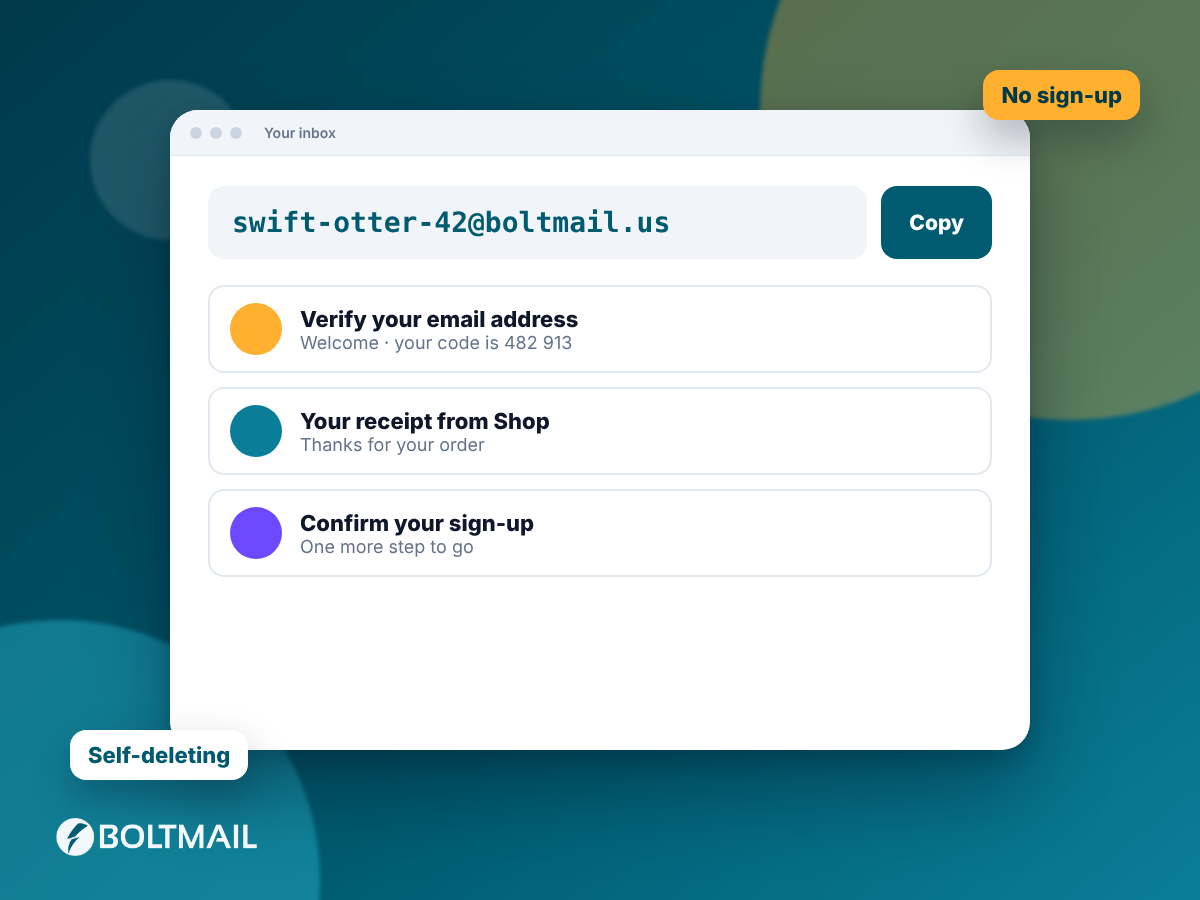
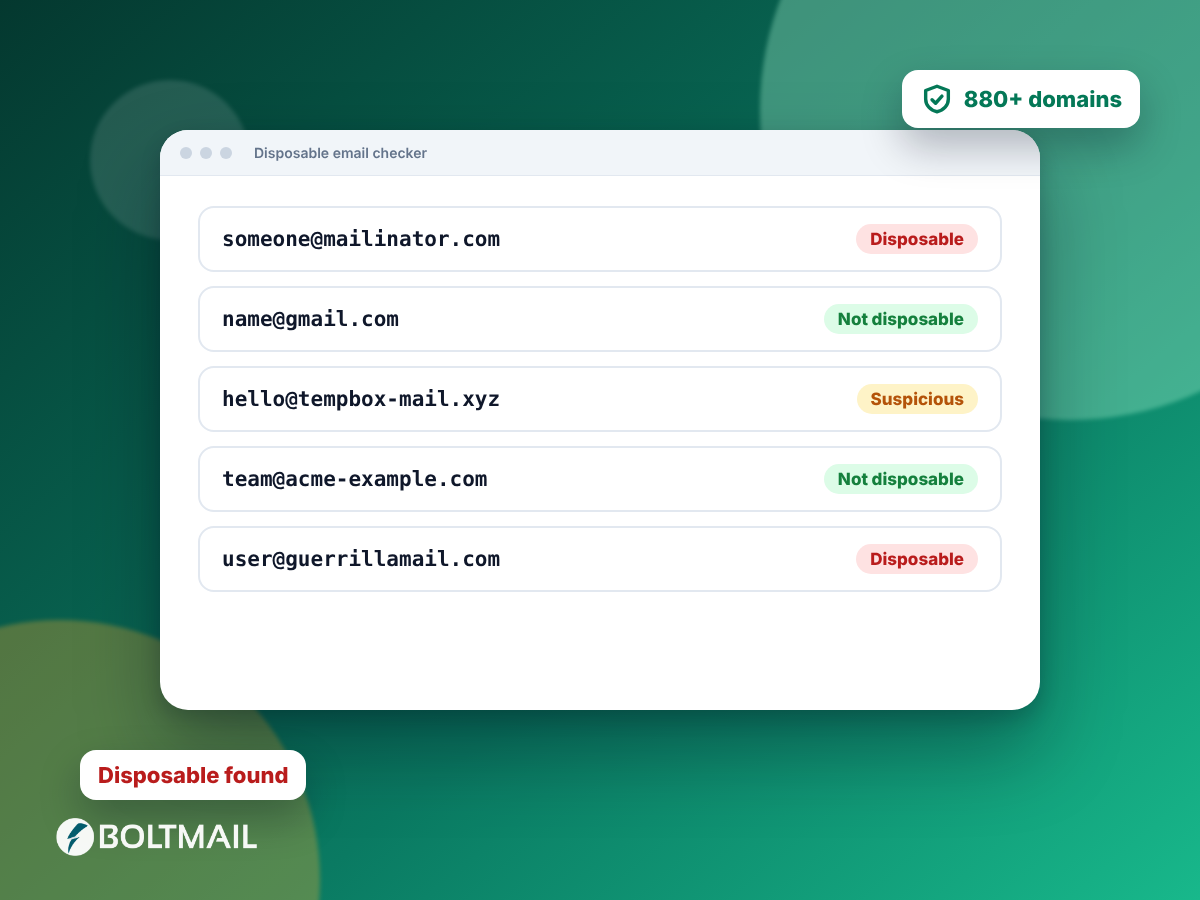
These are inboxes that exist on a website you open in your browser. There is no account. The address is created instantly, receives mail, and is deleted automatically. They are receive-only, which keeps them simple and hard to abuse. Our guide to temp mail and how it works explains the mechanics.
Burner email
"Burner" emphasises intent: you create it for one purpose and plan to burn it. Sometimes people mean a temporary inbox, sometimes a free address from a normal provider that they sign up for with a fake name. The second kind is more work, needs a password and often a phone number for verification, and leaves the account sitting around long after you stop using it.
Throwaway email
This is the most casual term and covers anything you do not mind losing. A throwaway might be a temporary inbox, an old address you stopped checking, or a second free account kept just for sign-ups.
Email aliases: a close cousin
An alias is a forwarding address that delivers to your real inbox. You can create many, give each site its own, reply through them and switch any one off when it gets noisy. It is more durable than a temporary inbox and more private than your real address. The trade-off is that your real inbox is still behind it. See temp mail vs email alias vs real email for a full comparison.
Comparing the options
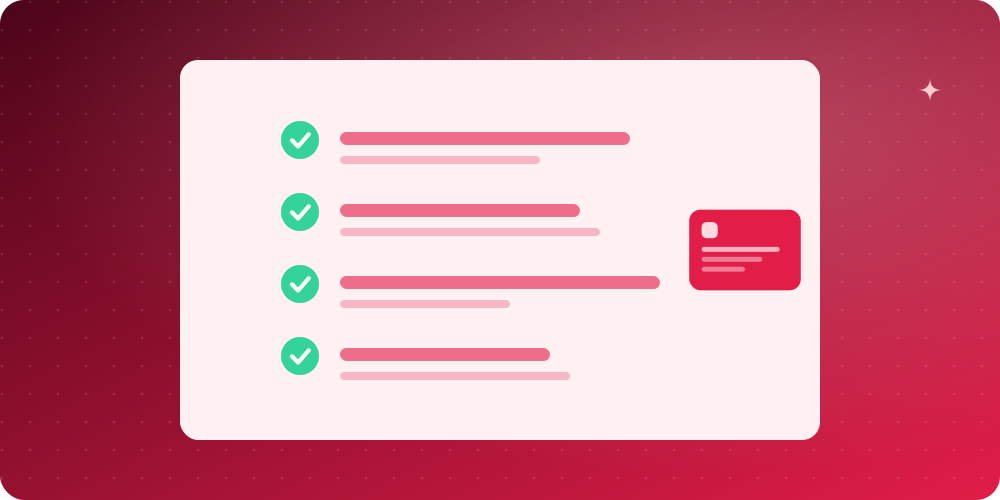
| Type | Setup | Lifespan | Can reply? | Best for |
|---|---|---|---|---|
| Temporary / disposable inbox | None | Minutes to hours | No | One-time confirmations |
| Burner account (free provider) | Account and password | Until you delete it | Yes | Long-running low-stakes accounts |
| Alias / forwarding address | Account with alias service | Months or years | Usually | Accounts you want to keep but protect |
| Real address | Already yours | Permanent | Yes | Banking, work, family |
When a burner email makes sense
- Downloading a free resource that insists on an email address.
- Entering a giveaway or survey you do not trust.
- Trying an app or game before deciding whether you want an account.
- Getting a discount code from a newsletter you will not read.
When it does not
Anything tied to money, identity or long-term access needs an address you can recover. Using a burner for a bank, a tax portal or a shop where you might need a refund can lock you out when it matters most. Our guide to temporary email safety lists the risks.
Are burner emails legal?
Using a disposable address to protect your privacy is legal almost everywhere. What is not acceptable is using it to commit fraud, harass people or evade a ban. The tool is neutral; how you use it is not.
Frequently asked questions
Is a burner email the same as a temp mail?
In practice, yes for most people. Strictly, "burner" describes the intent and "temporary" describes how the inbox behaves.
Can I get a burner email without a phone number?
Yes. A temporary inbox needs nothing at all. Our guide on receiving verification codes without a phone number covers the details.
Is a burner email anonymous?
It hides your real address from the site, but your IP address and other signals may still be visible to it. Treat it as spam protection, not total anonymity.